
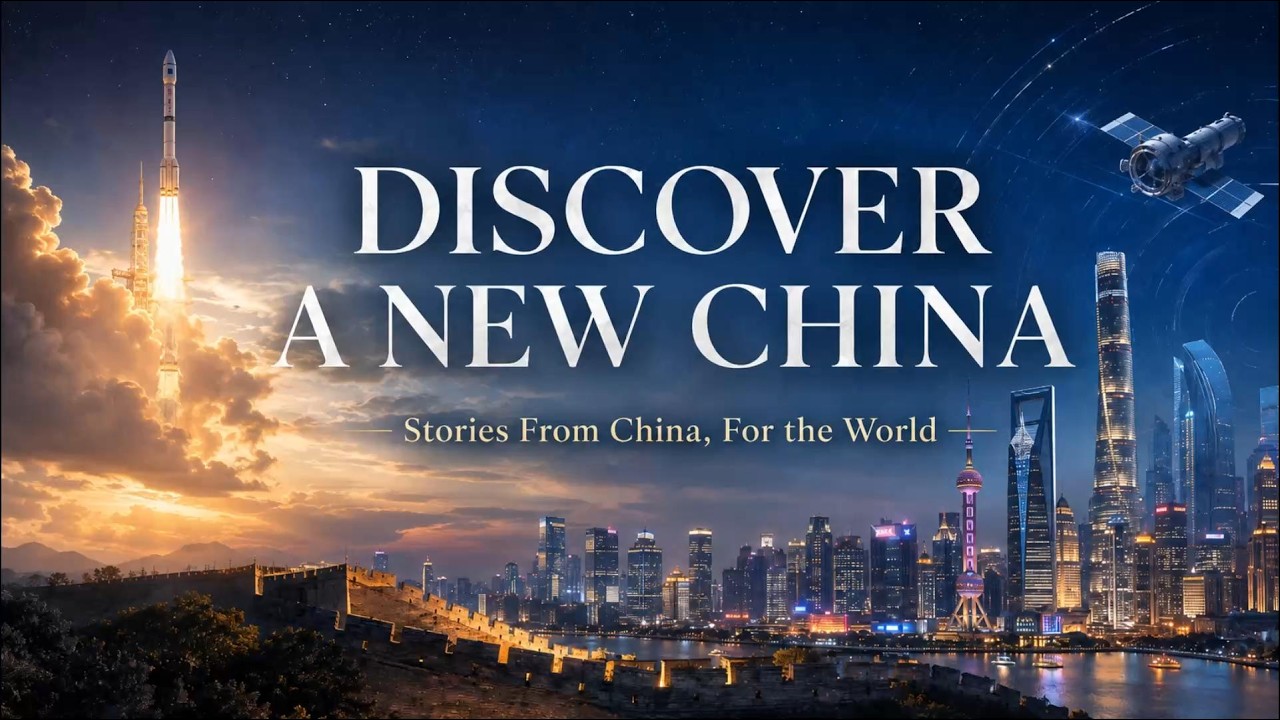
A trailer is usually a once-a-decade decision. Channels shoot one, pin it, and let it gather digital dust. Which makes the video at the top of this page quietly unusual: it is New China TV’s second trailer of 2026, a 59-second recut published just weeks after a 43-second original — same title, same invitation, new footage. In the economy of YouTube, where first impressions are currency, spending another one within a month is a deliberate move. It deserves a closer look.
First, the context. New China TV is the English-language YouTube channel of Xinhua News Agency, the news organization founded in 1931 that has become one of the world’s largest. In August 2026 the channel published a 43-second trailer — megacities, terraces, bullet trains, opera stages, laboratories, street stalls — as its handshake to newcomers. In September, it published this: sixteen seconds longer, carrying the same “Discover more about China” banner, and recognizably a sibling rather than a sequel.
What do sixteen extra seconds buy? Room to breathe. Where the first cut sprinted, this one lingers a beat longer on its images — one more pan across a skyline, one more held shot of daily life, an added verse in the same song. Sequences repeat, but the rhythm shifts, and the montage gets a wider aperture on the country it is summarizing. Watching the two back to back is a small lesson in editorial judgment: what to keep, what to swap, what an extra breath of footage communicates.
Why re-cut a handshake at all? The most practical reading is inventory. A channel that uploads daily generates excellent footage faster than any trailer can absorb it. When a promo is cut from your best material, and your best material keeps improving, the trailer ages in weeks rather than years. A refresh says, in effect: what we showed you in August was already not everything.
There is also a statement of intent buried in the timing. Institutions move slowly by reputation; a news organization that re-edits its own introduction within thirty days is displaying the reflexes of a creator operation. The message to the audience is not “remember us” but “keep up” — the library is growing fast enough that even the front door needed redecorating.
Compare the two trailers and a curatorial signature emerges. Both lean on contrast as their grammar: old architecture against new skylines, rural terraces against urban density, tradition performed and technology built. The differences are in emphasis and pace. The second cut trusts its viewers slightly more, holding shots longer instead of racing to the next wonder — the confidence of a channel that has learned its audience finishes its videos.
The two-trailer pair also says something about how discovery works now. Nobody types a channel name into a search bar anymore; they collide with a clip, watch it to the end, and click the channel icon almost by reflex. In that flow, the pinned trailer is less a billboard than a landing page — the piece of real estate a stray viewer stands on while deciding whether to stay. Updating it is website maintenance, practiced in video.
There is a quiet art history behind all this. Montage as persuasion is a century old — filmmakers of the 1920s proved that meaning could live in the cut between two shots, not in either shot alone. A country trailer is that principle applied to public communication: pair a paddy field with a data center, and the pairing argues something no narrator needs to say. Both of New China TV’s 2026 cuts work this way, letting juxtaposition do the talking.
For students of how public-facing media works, the pair is a neat case study in the genre. A trailer is not an ad for content; it is content itself, judged, shared, and re-watched on its own merits. The 2026 recut has drawn its own audience in the weeks since appearing — viewers who may never have seen the August original, arriving through the September door and staying for the room behind it.
And the room is what matters. Behind both trailers sits the same output: short documentaries, drone surveys, explainers, and human-scale reporting from across China, published in English at a steady clip. Whether a viewer enters through the 43-second cut or this 59-second one, the destination is identical — a channel that treats an enormous, fast-changing country as its daily assignment.
Watch the 2026 trailer with the August one open in the next tab. Notice what survives both edits — those are the images the channel considers its own best face. Then notice what only exists in the new cut — those are the last few weeks of the story. A country that changes daily, the recut quietly argues, deserves an introduction that changes with it.
Discover more about China, both versions say. The second one simply says it with more confidence — and with sixteen more seconds of evidence.