
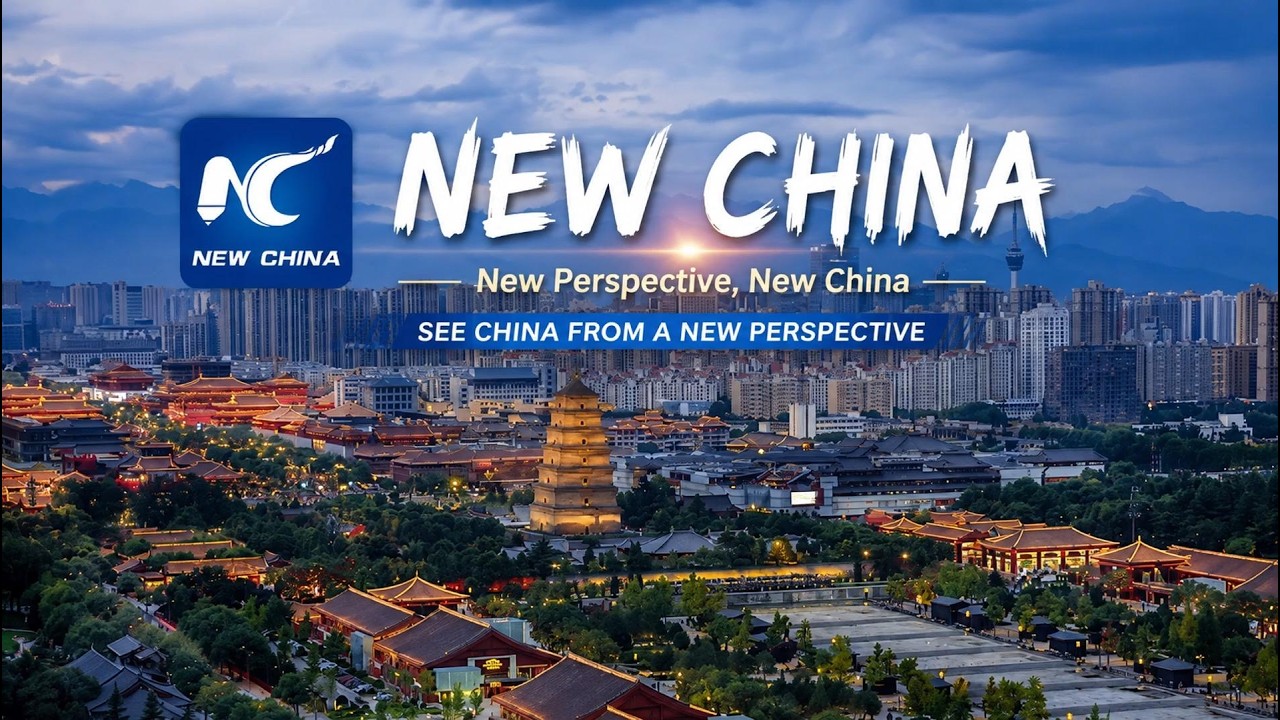
Forty-three seconds is a small parcel of time. Yet in the trailer sitting at the top of this page, those seconds hold skylines and rice terraces, bullet trains and opera masks, laboratory benches and sizzling street stalls — a montage of a country at full breadth, cut at the tempo of a highlight reel. It is the official trailer for New China TV, and its promise is delivered in the title: discover more about China.
Behind that invitation stands an institution rather than a hobbyist with a camera. New China TV is the English-language YouTube channel of Xinhua News Agency, a news organization founded in 1931 and headquartered in Beijing. Over nine decades it has grown into one of the largest news-gathering operations on the planet, with correspondents stationed in every Chinese province and in bureaus scattered across the world. The channel is one of the doorways through which that reporting machine speaks to an international audience.
What does the trailer’s rapid montage actually promise? Breadth, first. In under a minute the edit visits megacities and mountain villages, high technology and ancient performance art, infrastructure of steel and kitchens of steam. The implied claim is straightforward: whatever corner of China you are curious about, cameras have already been there, and the footage is waiting.
For viewers who know the country mainly through headlines, the trailer offers a different register. News about a nation of more than a billion people tends to arrive in fragments — a statistic, a policy, a dispute, a record broken. Montage does the opposite: it accumulates texture. A terraced hillside, a train platform at dawn, a stage lit for opera — none of these explains China, but together they gesture at its scale and variety in a way a paragraph of text cannot.
The choice of language matters as much as the choice of images. Everything on New China TV is published in English, which does two quiet things at once. It lowers the barrier for a global audience — no subtitles, no translation lag — and it frames the channel as a standing invitation rather than a broadcast aimed inward. A trailer that says “discover more” in your own language is making a promise about the rest of the library.
And the library is the point. A trailer is a doorway, not a room. What sits behind this one is a steady stream of short documentaries, explainers, drone flights, and slice-of-life reports: pandas in snow, bridges under construction, night markets at full cry, harvesting seasons seen from above. The uploads keep a rhythm — enough that a curious subscriber finds something new waiting most mornings.
Readers of a food site will find a particular pull here. Few countries photograph their own kitchens as compulsively as China does, and channels like this one are thick with it: hand-pulled noodles folded in Lanzhou stalls, crayfish heaped in night-market trays, dumplings pleated at grandmother speed, chili harvests drying like red rooftops. The trailer’s glimpses of street food are not decoration — they are a genre the channel returns to constantly, and for many overseas viewers it is the friendliest possible entry point into the country’s daily life.
How to explore, if the trailer lands? Treat it like a menu rather than a statement. Pick the image that held your eye longest — the train, the opera, the terraces, the stall — and search the channel for that subject; the algorithm of your own curiosity is a better guide than any playlist. Then let one video lead to the next, the way you might follow a dish from a market stall back to its home province.
There is a craft argument for channels like this, too. Short-form video has rewired how younger audiences meet a subject: a forty-second clip is now the unit of first contact, and depth is something you click toward afterward. Institutional news organizations understood this later than creators did, and the ones that adapted — compressing their footage into fast, well-cut verticals and montages — found audiences that print editions never reached.
Since the trailer appeared in August 2026, millions of viewers have watched it, and the counter keeps moving. A trailer earning that kind of attention is doing its job twice over: introducing the channel and proving, by its own popularity, that curiosity about China — the ordinary, visual, human kind — is far more widespread than the comment sections of the internet would suggest.
Watch the forty-three seconds once for pleasure and once for structure. Notice how the edit alternates old and new, fast and still, vast and intimate. That rhythm is the channel’s editorial thesis in miniature: China is too big for a single story, so here are many, cut quickly, and the door is open.
Discover more about China, the title says. The honest answer to that invitation is that “more” is the operative word — more places, more moods, more ordinary mornings than any one viewer will exhaust. The trailer simply holds the door and lets you walk in.